I TRAVELED back to my hometown of Narvacan, Ilocos Sur—located about 320 kilometers north of Manila—to celebrate my father’s 71st birthday last November 11.
"This might be my last," he had gently insisted when he called to invite me a month prior. Urged by those heavy words, I dropped everything to go and pay my respects to a man now battling a serious heart ailment. But as I journeyed north, I realized this trip was also a rare opportunity to step outside my daily routine and truly find my way back home.
I desperately needed this homecoming. It wasn't just for my father's sake; it was to fulfill a quiet, pressing wish for myself. I went home to unburden a heavy weight that had taken up residence inside my chest. I needed to return to my roots to discern the true essence of my life once more—to look back and see if the boy I used to be would be proud of the man I had become, and if I had done enough to make my parents and childhood friends proud. It was a flawless moment for reconnecting severed ties, rekindling relationships, and revisiting the invisible, unbreakable bond that tethers me to my kin and the soil of my birth.
Naturally, a true homecoming required a visit to Paraiso ni Juan, a low-profile but breathtakingly beautiful coastal stretch in Barangay Sulvec. Walking its rugged shores toward a local landmark always feels less like a casual stroll and more like a spiritual pilgrimage to a hidden sanctuary.
For this particular trip, two of my classmates from the PUP College of Law accepted my invitation to experience the coast with me. While my own reasons for visiting were deeply personal, I wanted my guests to experience the raw majesty of the landscape. I jokingly told them that one cannot truly claim to have visited Narvacan without setting foot in Paraiso ni Juan.

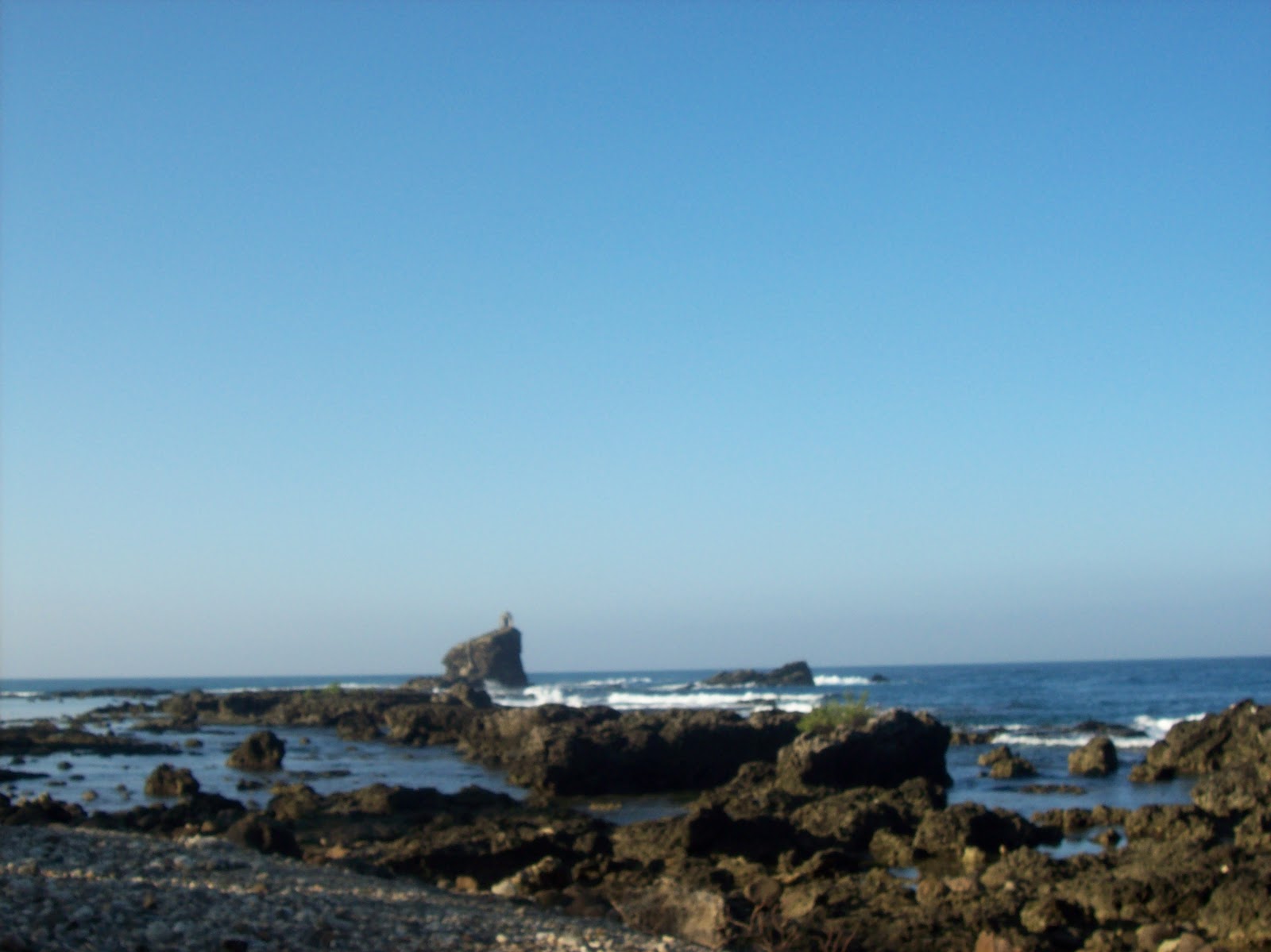
Resting just a few meters from the rocky shoreline stands Immagamang, a massive, craggy boulder rising two stories high, crowned by a solitary grotto of the Virgin Mary. This coastal monument derives its name from the Ilocano word agamang, which translates to "rice granary" or "storehouse"—a fitting description, as the boulder is visible from several kilometers away as you navigate the winding coastal road.
Even though both of my friends were first-timers in the Ilocos region and completely unaccustomed to this type of terrain, they willingly braved the rugged shoreline with me. To reach the base of the rock, we had to wade through a section of the incoming tide. We slipped off our sandals, rolled up our pants, and stepped into the water. The tide was high, the swells were imposing, and the submerged stones were incredibly slippery. Fortunately, a relative who had driven us to the beach kindly stepped in to guide our path until we safely reached the wide, flat stone ledge directly beneath the boulder.

We paused there for a long moment, taking in the alluring landscape. A calm, shimmering blue ocean stretched out around us, mirrored on the landward side by a picturesque backdrop of verdant coastal hills and sweeping mountain ranges—all illuminated by the brilliant, silvery glow of the morning sun. Looking back toward the distant shore where our trek began, my friends heaved a collective sigh of relief.
I took the lead in scaling the boulder, utilizing a set of man-made steps carved into its side. These steps didn't exist during my childhood; back then, only the bravest and most agile youths dared to climb the sheer face of the rock with their bare hands.
There is a magnetic quality to Immagamang that constantly tugs at my heartstrings. As I gazed down at the pristine waters of the West Philippine Sea breaking in rhythmic, white swells against the craggy rocks below, I could feel an overwhelming sense of warmth, love, and tranquility wash over me.
Best of all, the rock is a vessel for my most enduring memories. During my college days, I could never resist stealing a glance at this solitary boulder whenever I passed Sulvec on my way to Vigan. Because the landmark sits on the northernmost border of Narvacan, it served as a poignant marker signaling that I was leaving my hometown. Conversely, whenever I returned after a long week of studying in the kabisera (capital), its familiar silhouette was a beautiful, welcoming beacon of safety. (Our family home rests in Nanguneg, which sits at the southernmost tip of the town, making the rock the literal gateway to my childhood).
In my high school years, our rowdy, close-knit group of boys treated this spot as a favorite getaway. We would haunt the rock for its spectacular views, racing along the craggy edges and diving into the deep water in search of cheap thrills and teenage adventure.
Years later, in 1999, my late wife scaled this very same rock alongside me during a summer vacation. I remember how much she loved it. After a tortuous trek across the beach and a risky scramble up the stone face, we had stood together at the summit, completely mesmerized by the panoramic expanse of the sea.
Standing on top of the rock this time, I felt a familiar sensation wash over me—it felt remarkably like falling in love again. It is the kind of profound love that makes you feel beautifully lost, yet entirely safe. If I had been left to my own devices, I would have gladly stayed up there alone until sundown, searching for the elusive solace I have been desperately seeking ever since a tragic event upended my life. I wanted to look out at the horizon, contemplate my immediate future, and catch even a fleeting glimpse of peace and consolation. Yet, even in those brief moments shared with my classmates on the summit, I felt the unmistakable thrill of standing on sacred, familiar ground. I was, at long last, truly home.
Three days after that climb, my friends and I boarded a bus back to Manila. It was an incredibly brief visit, a reminder that my daily life, career, and immediate family responsibilities are now permanently enmeshed in a different place.
Yet, that singular November afternoon offered me the true comfort of a weary mariner who has finally discovered a sturdy shelter from a violent storm. Like any exhausted traveler, I had journeyed north looking for the sanctuary of a home, and against all odds, I succeeded in finding it—if only for a fleeting moment.

Now, back in the city, I feel as though I have been uprooted all over again, torn away from my father, my tightly knit clan, our neighbors, and a newfound love. Even now, my mind is already drifting toward planning another homecoming soon, knowing that without the anchor of my roots, I risk wasting my days in the quiet loneliness of the city.


2 comments:
I'm glad you made this blog about paraiso ni juan. this is just like going home for me too. thanks!
thanks isabelle.you might have scaled the "rock" too and felt the same way...
Post a Comment